
Once a song is registered, how do you prove it existed that day
“Register it on the blockchain” is a sentence people nod at and do not picture. This post pictures it. One song, one diagram in three acts, and then the part that matters: what you can do with it six months later when someone says the song is theirs, or when a buyer asks what exactly they would be buying.
The example is deliberately ordinary. A singer — the diagram calls her Taylor — finishes a track called midnight-rain.mp3 on 8 September and registers it here on 10 September, under her own name, without a character attached to it. Nothing about the flow changes if the work is a video, a post, or an image, or if it is bound to a character; we come back to that at the end.
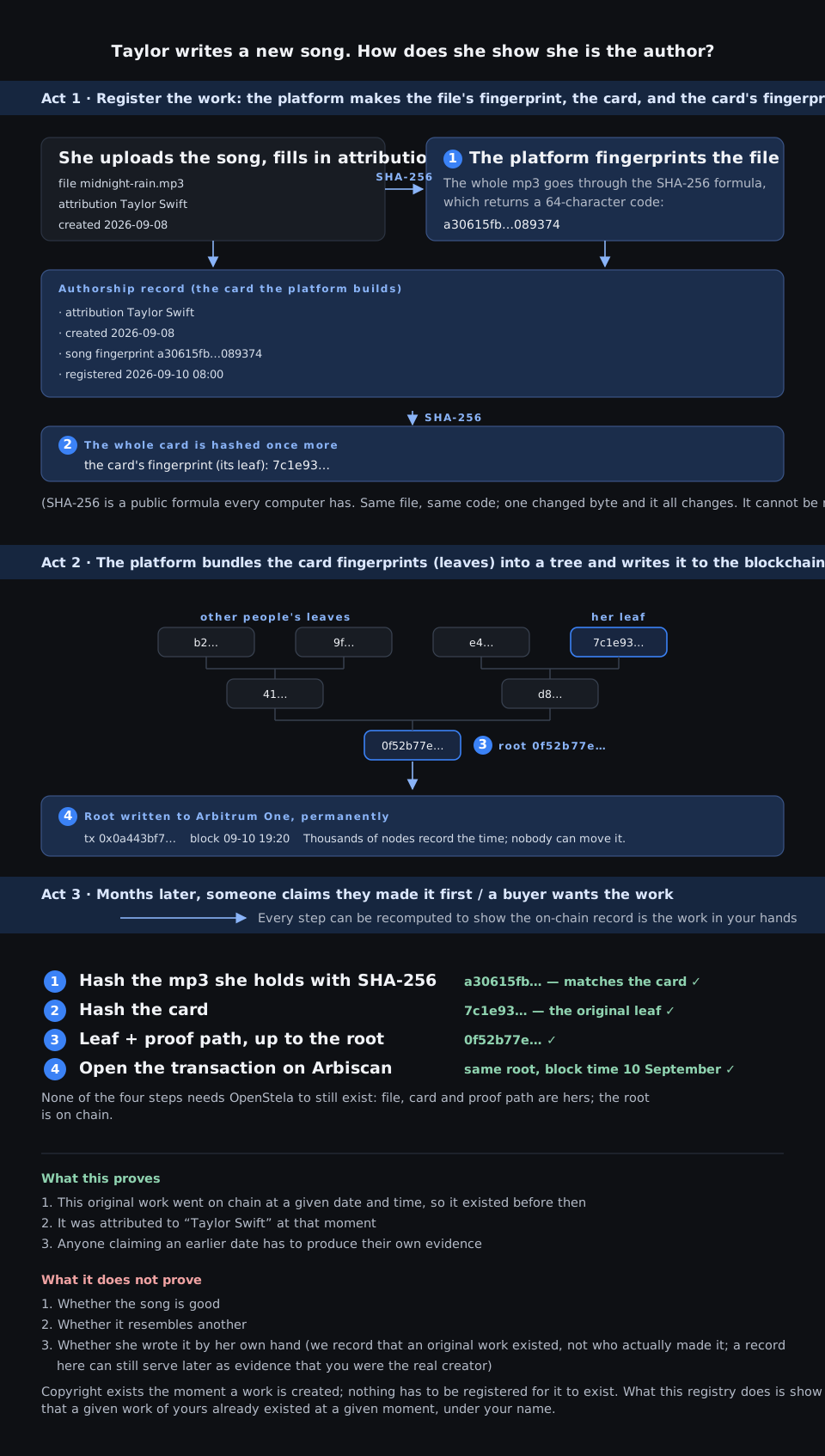
The whole path, top to bottom. Each act is taken apart below. Open full size →
Act 1 — the fingerprint, the card, the card's fingerprint
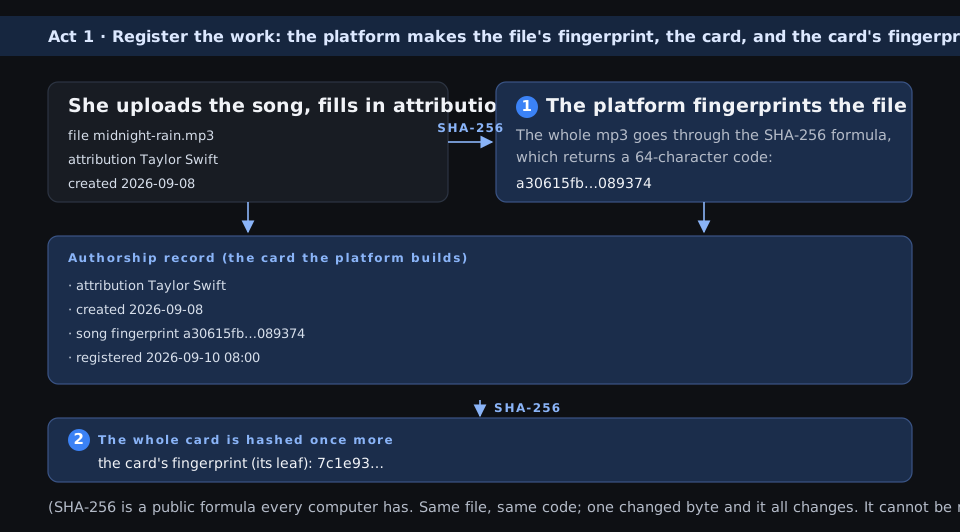
She uploads the file and fills in three things: the name the work is published under, the date she made it, and — if AI tools were involved — what she herself contributed. That last field is not decoration. In most jurisdictions only the human contribution to an AI-assisted work is protected at all, so the record asks for it up front and freezes it with everything else.
The platform never keeps a copy of the song for the record's sake. What it computes is a fingerprint: the entire file goes through SHA-256, a public formula every computer has, and comes out as a 64-character code. The same file always gives the same code; change one byte and the whole code changes; and the code cannot be run backwards into the file. The song stays on her disk. Whether it also appears on her public page is a separate switch she controls.
The fingerprint, the name, the dates and the contribution are then written onto one small card — the authorship record. She can download it, and it is what her public page shows. Then the card itself goes through SHA-256 once more. That second code, the fingerprint of the card, is the only thing that leaves her account. We call it a leaf, for a reason that becomes clear in the next act.
Act 2 — one tree a night, one root on the chain
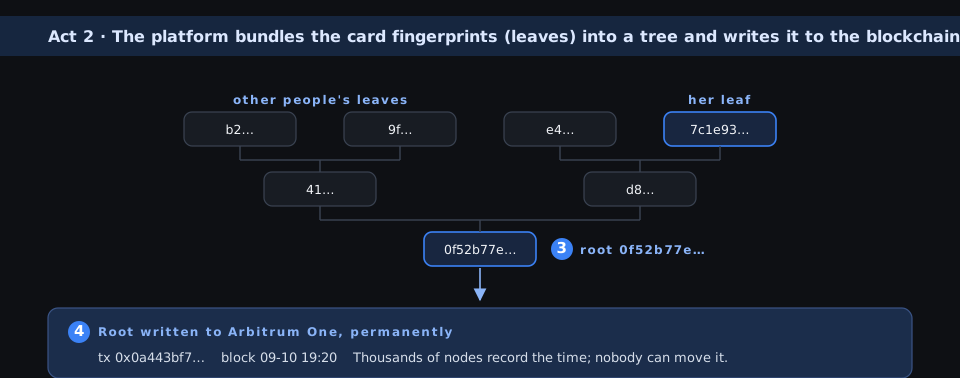
Writing every card to a blockchain individually would cost money per card and scale badly. So every night the platform takes all the leaves registered that day — hers, everyone else's — and pairs them up: two leaves are hashed together into one code, those codes are paired and hashed again, and so on until a single code remains. That code is the root, and the structure is a Merkle tree. Change one character on any card anywhere in the batch and the root comes out different.
The root is what gets written into a transaction on Arbitrum One, a public chain whose clock is kept by thousands of independent machines. The transaction has a block time. That time is the thing nobody — not the platform, not the registrant — can move afterwards.
Along with the root, the platform hands her the proof path: the handful of sibling codes her leaf was paired with on its way up the tree. With the card, the path and the transaction link, she holds everything needed for the third act. They come together in the Proof Pack she can download from her work's page, as a PDF for people and a JSON file for machines.
Act 3 — months later, anyone recomputes four steps
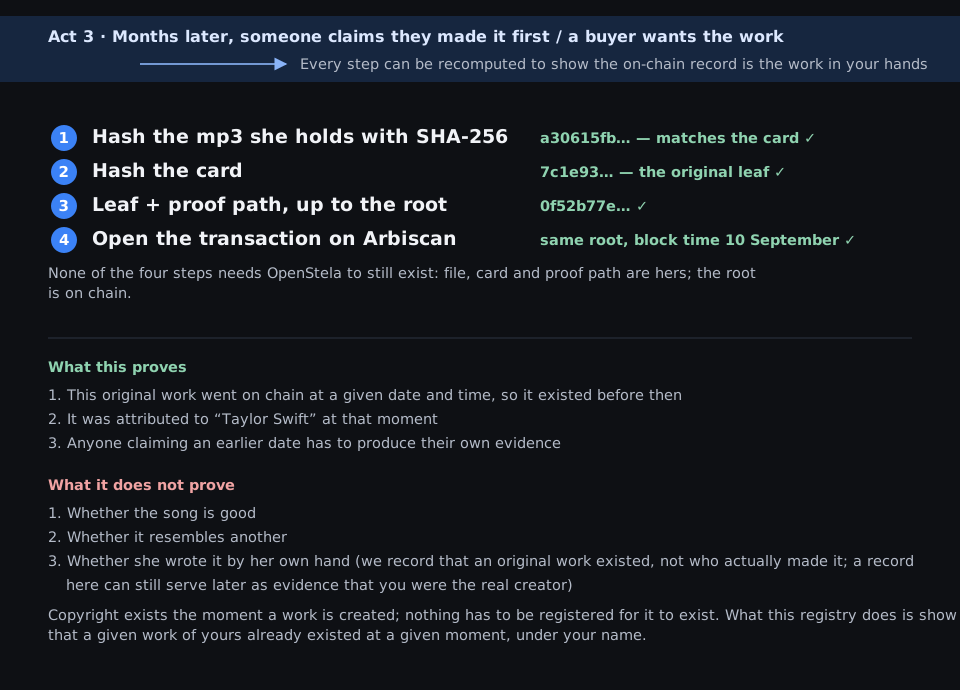
Now someone claims the song. Or a buyer wants it and asks what the record is worth. Either way the check is the same, and it does not need OpenStela to still exist:
- Hash the mp3 she holds. The code must match the fingerprint on the card.
- Hash the card. The code must equal the original leaf.
- Walk the proof path. Leaf plus siblings, hashed upward, must arrive at the root.
- Open the transaction on Arbiscan. The root in it must be that root, and the block time is the date that counts.
Anyone can run these four steps with any SHA-256 tool. The verify page does them for you and shows the three layers separately — registered, anchored, verified on chain — because only the third one requires no trust in us.
What this proves
- This original work went on chain at a given date and time, so it existed before then.
- It was attributed to “Taylor Swift” at that moment.
- Anyone claiming an earlier date has to produce their own evidence.
What it does not prove
- Whether the song is good.
- Whether it resembles another.
- Whether she wrote it by her own hand. The registry records that an original work existed, not who actually made it; a record here can still serve later as evidence that you were the real creator.
Copyright exists the moment a work is created; nothing has to be registered for it to exist. What this registry does is show that a given work of yours already existed at a given moment, under your name. That is a narrower claim than “proof of ownership”, and it is the one that holds up.
What to keep
Three things, and the Proof Pack bundles the last two: the original file, unchanged; the card and its proof path; and the transaction link. Lose the file and steps one and two fail — the chain can vouch for a fingerprint, not for a song you no longer have.
Where a character comes in
If the work belongs to a character — a virtual singer's track, a VTuber's clip — she binds it to the character's registry number. That binding is a second card, naming the character, its specification version and the authorship record's fingerprint, and it goes through the same three acts on its own. The two dates then tell a story of their own: the work existed on the 10th; it was bound to this character on the 19th. The four pieces of evidence on the binding — timing, attribution, rights, exposure — are added on top, each as a dated record of its own.
一首歌登記之後,怎麼證明它那天就存在
「登記上鏈」這四個字,大家聽了會點頭,但很少人腦中有畫面。這篇就是那個畫面:一首歌、一張分三幕的圖,然後講最要緊的部分——半年後有人說這首歌是他的、或是有買家問「我到底在買什麼」的時候,這份紀錄能拿來做什麼。
例子刻意選得平常。一位歌手——圖裡叫她泰勒絲——9 月 8 日做完一首 midnight-rain.mp3,9 月 10 日用自己的名字在這裡登記,沒有掛任何角色。換成影片、貼文、圖片,或是綁到角色上,流程一個步驟都不會變;文末會回來講角色。
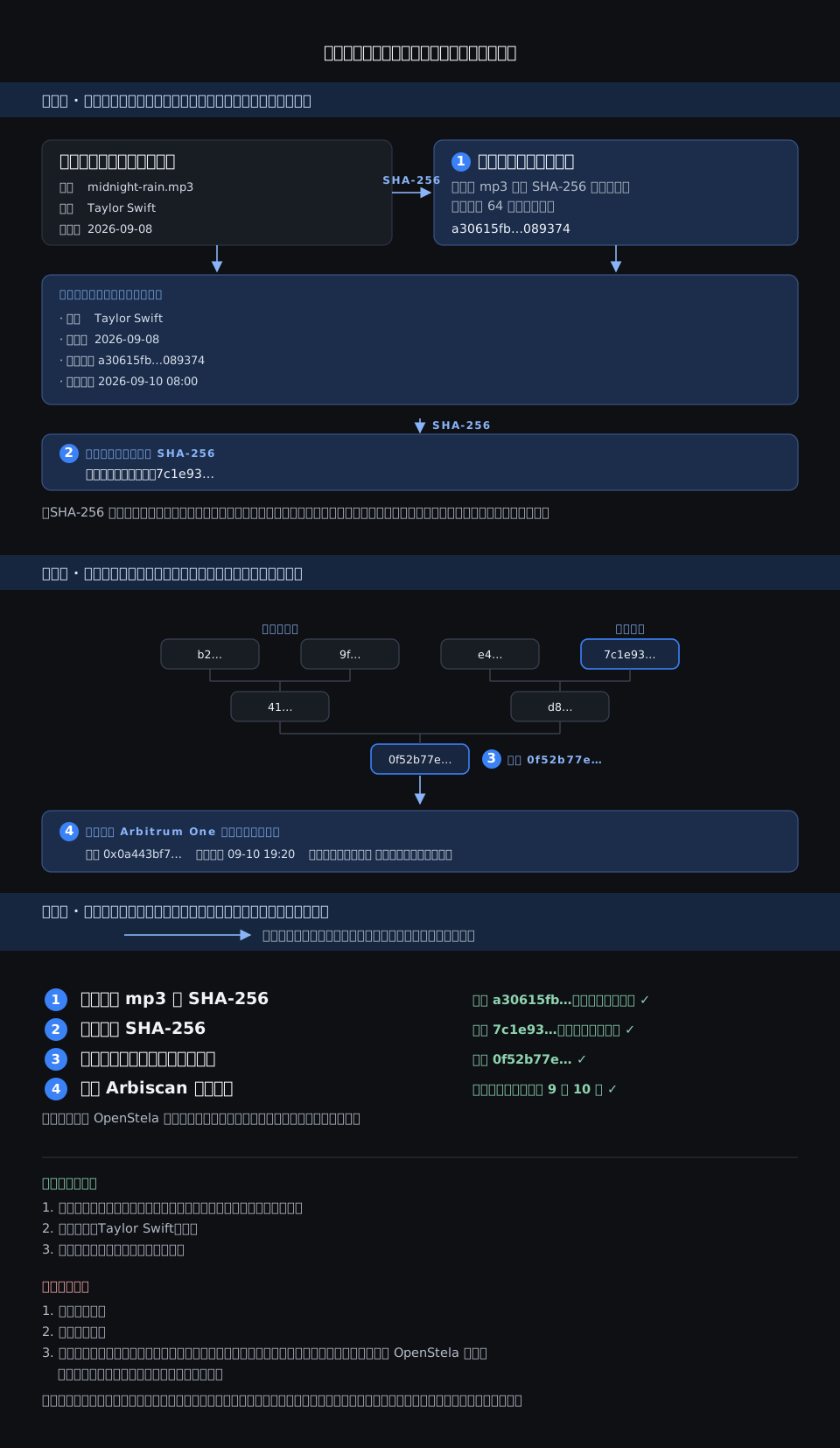
從上到下的完整路徑。下面把三幕各自拆開講。 開啟原尺寸 →
第一幕:指紋、卡片、卡片的指紋
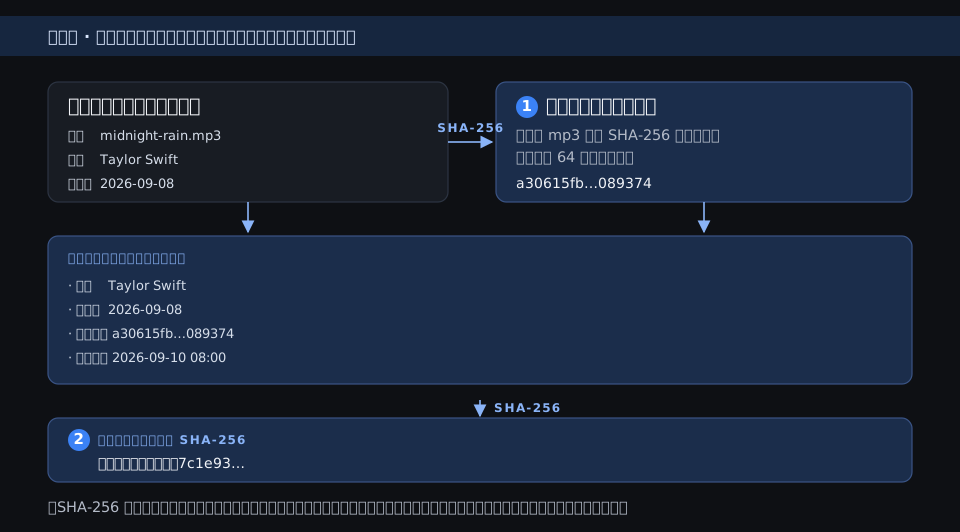
她把檔案傳上來,填三件事:作品公開發表時用的名字、做完的日期,以及——如果用了 AI 工具——她自己做了哪些部分。最後這一欄不是裝飾。多數地方的法律只保護 AI 生成作品裡「人」的那部分,所以紀錄一開始就問清楚,和其他欄位一起凍結。
平台不會為了做紀錄而留一份歌。它算的是指紋:整個檔案丟進 SHA-256——一條全世界公開、任何電腦都有的數學公式——吐出一串 64 個字的代碼。同一個檔案永遠算出同一串;改一個位元組,整串全變;而且從代碼反推不回檔案。歌留在她自己的硬碟裡。要不要同時放在她的公開頁,是另一個她自己控制的開關。
指紋、署名、日期、貢獻,接著寫成一張小卡片,就是著作紀錄。她可以下載,公開頁上顯示的也是它。然後這張卡片本身再算一次 SHA-256。第二串代碼——卡片的指紋——是唯一離開她帳號的東西。我們叫它葉子,原因看下一幕就懂。
第二幕:每晚一棵樹,一個樹根上鏈
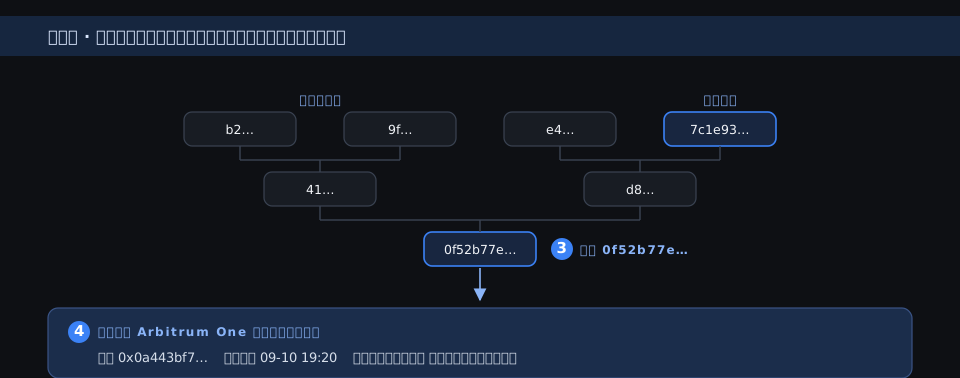
每張卡片各寫一筆進區塊鏈,一張要付一次錢,量大了撐不住。所以平台每天晚上把當天登記的葉子——她的、其他所有人的——兩兩配對:兩片葉子合在一起算一串,算出來的再配對再算,一直到只剩一串。那一串叫樹根,這個結構叫 Merkle 樹。整批裡任何一張卡片改一個字,樹根就長得不一樣。
寫進鏈上的只有樹根:Arbitrum One 是一條公開的鏈,時間由幾千台互不相識的機器一起記。那筆交易有它的區塊時間,而那個時間,平台動不了,登記人也動不了。
樹根之外,平台還交給她一份證明路徑:她那片葉子往上走的過程中,每一層配對到的另一半代碼。卡片、路徑、交易連結,三樣在手,第三幕需要的東西就齊了。它們一起裝在作品頁可以下載的存證包裡,一份 PDF 給人看,一份 JSON 給機器算。
第三幕:數月後,任何人重算四步
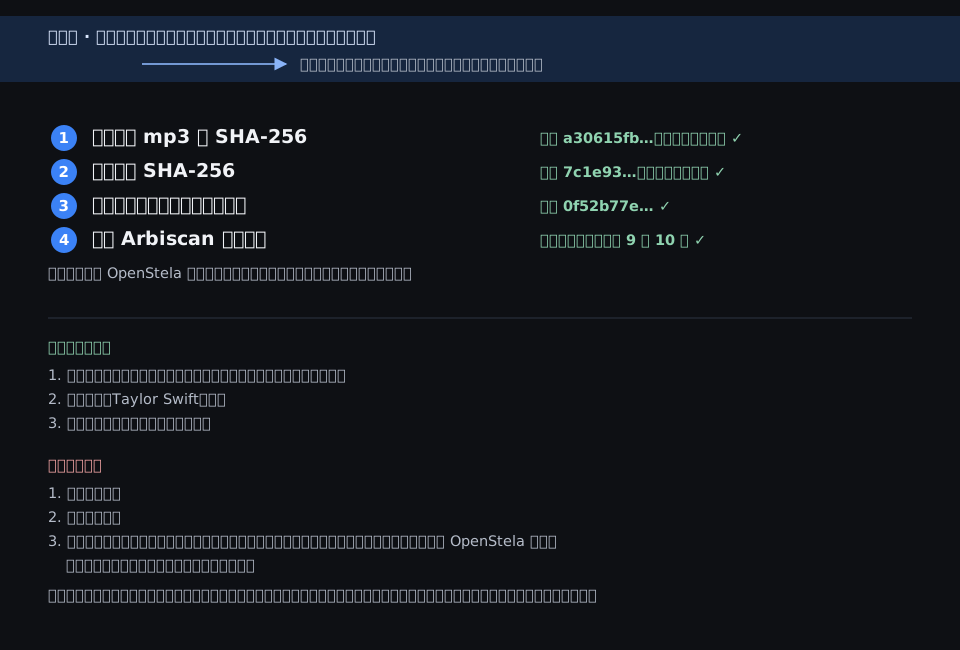
有人說這首歌是他的。或者有買家想買,問這份紀錄值多少。兩種情況,查法一樣,而且不需要 OpenStela 還活著:
- 拿她手上的 mp3 算一次 SHA-256。要和卡片上的指紋一樣。
- 拿卡片算一次。要等於當初那片葉子。
- 沿證明路徑往上算。葉子加上每層的另一半,一路算上去要剛好等於樹根。
- 到 Arbiscan 打開那筆交易。裡面的樹根要是同一串;區塊時間就是算數的那個日期。
這四步任何人拿任何 SHA-256 工具都能做。查驗頁會替你做完,並且把三層分開顯示——已登記、已上鏈、鏈上核對通過——因為只有第三層不需要相信我們。
所以證明了什麼
- 這件原創作品在某個日期時間已經上鏈,所以在那之前就存在。
- 當時就是以「Taylor Swift」的名義登記的。
- 誰要說自己更早,得拿出自己的證據。
沒證明什麼
- 歌好不好。
- 像不像別人的。
- 是不是她親手寫的。登錄簿記的是「有一件原創作品存在」,不是誰實際做的;但這裡的一筆紀錄,日後仍然可以當作你才是真正創作者的證據。
著作權在作品完成的那一刻就存在,不需要登記什麼它才成立。這個登錄簿做的事,是證明你的某件作品在某個時刻已經存在、而且掛的是你的名字。這比「所有權證明」窄得多,也正因為窄,才站得住。
要留好哪些東西
三樣,後兩樣存證包已經打包:原檔,一個位元組都別動;卡片和它的證明路徑;交易連結。原檔弄丟,第一步和第二步就過不了——鏈能替一串指紋作證,不能替一首你已經沒有的歌作證。
角色在哪裡出場
如果這件作品屬於某個角色——虛擬歌手的歌、VTuber 的片段——她把它綁到角色的登錄編號上。綁定是第二張卡片:寫著角色編號、規格版本、著作紀錄的指紋,然後自己走一遍同樣的三幕。兩個日期於是各自說話:作品 10 號就存在;19 號綁到這隻角色。綁定上的四項佐證——時序、歸屬、權利、公開——再各自以有日期的紀錄疊上去。